What Are Retail Fixtures? A Complete Guide for Modern Stores
Retail fixtures are permanent or semi-permanent structures used in stores to display products, organize merchandise, and support checkout operations. Common examples include shelving, display cases, checkout counters, and beverage stations.
These fixtures play a critical role in how customers interact with products, navigate a store, and ultimately make purchasing decisions.
What Are Retail Fixtures?
Retail fixtures are the physical components inside a store that hold, present, and organize products for sale. They are designed to improve visibility, enhance customer experience, and support efficient store operations.
From grocery stores to convenience stores and specialty retail environments, fixtures help create a structured and engaging shopping experience while reinforcing brand identity.
Types of Retail Fixtures
Explore KPI Concepts’ full range of retail fixture solutions designed for grocery, convenience, and retail environments.
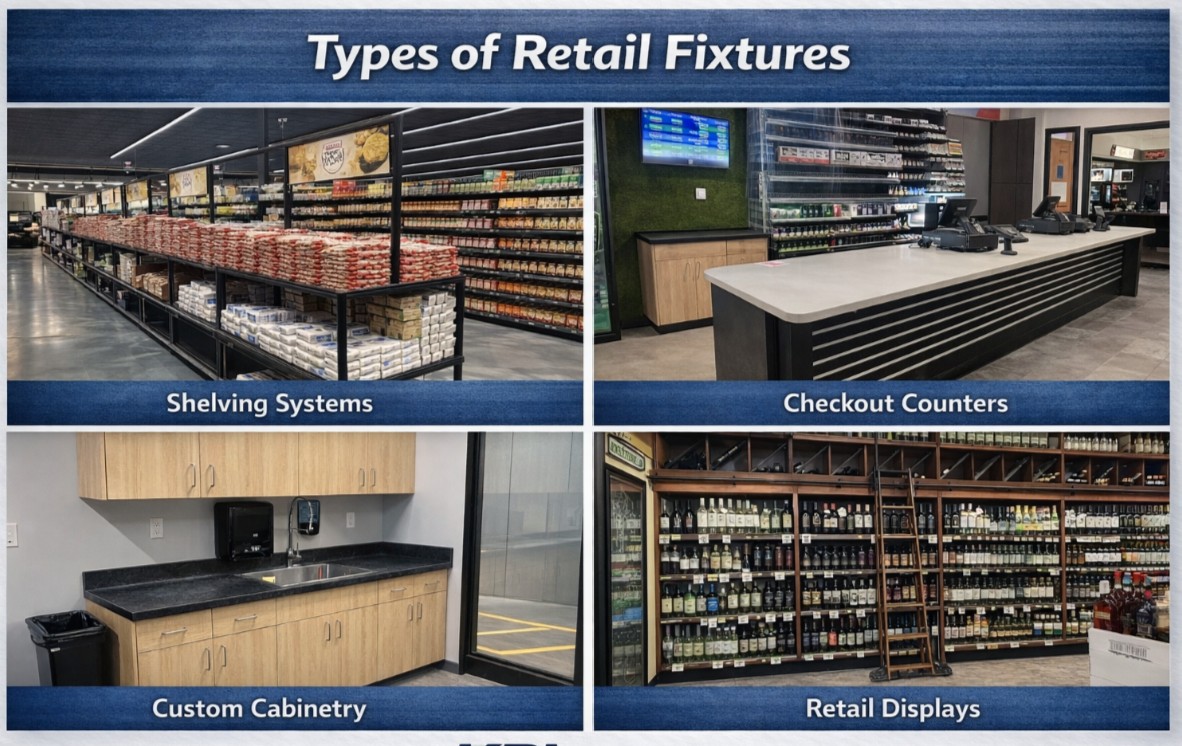
Shelving Systems
Shelving systems are one of the most common retail fixtures, used to display products in an organized and accessible way. Gondola shelving, wall shelving, and endcap displays are widely used in grocery and retail stores.
Display Cases
Display cases are used to showcase products while protecting them. These are commonly used for bakery items, electronics, or high-value merchandise.
Checkout Counters and Checklanes
Checkout counters and checklanes are essential for processing transactions. In grocery and convenience stores, they are designed for efficiency, durability, and customer flow.
Beverage Stations
Beverage stations are increasingly popular in convenience stores, offering self-service options for coffee, fountain drinks, and specialty beverages.
Merchandising Displays
Custom merchandising displays are used to highlight specific products, promotions, or seasonal items. These fixtures help draw attention and increase impulse purchases.
Materials Used in Retail Fixtures
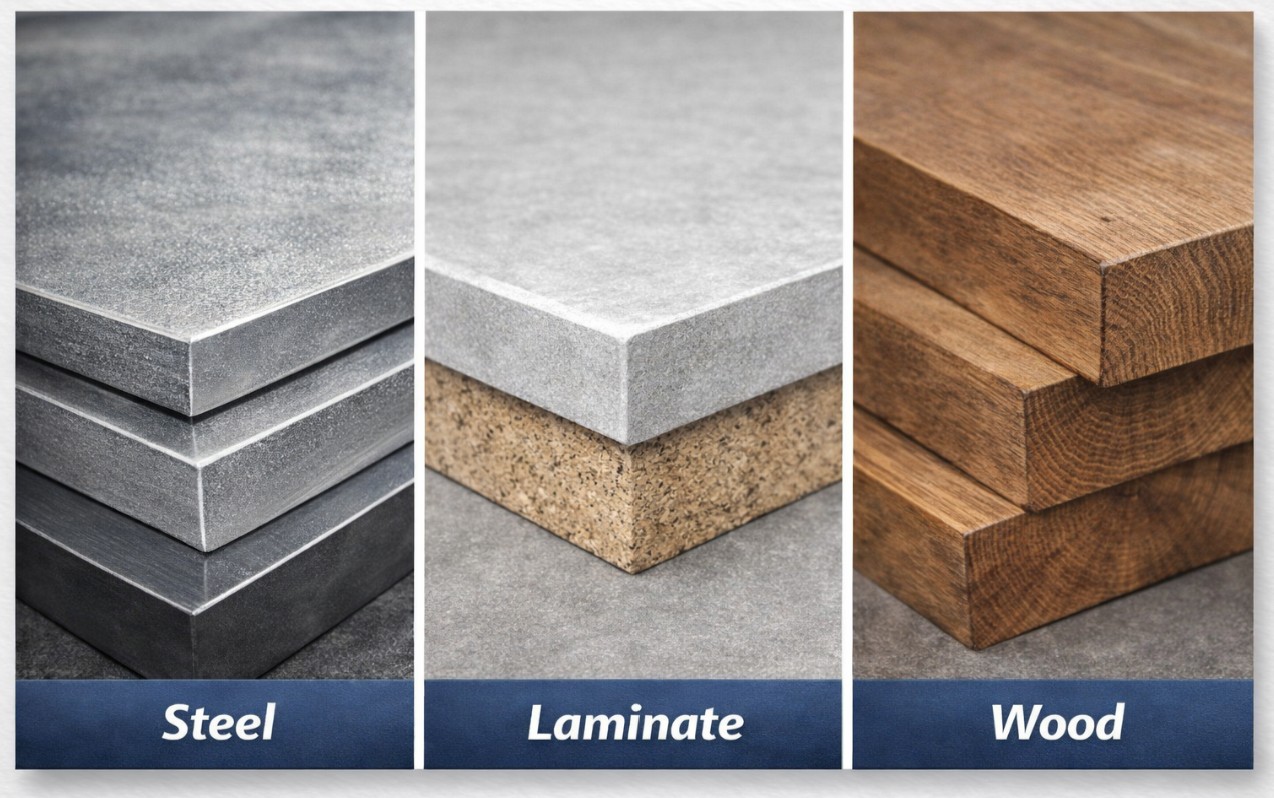
Steel
Steel is widely used for its strength and durability. It is ideal for shelving systems, frames, and high-traffic environments.
Laminate
Laminate provides a clean, finished look and is commonly used on cabinetry and counters. It is cost-effective and easy to maintain.
Wood
Wood adds a warm, premium aesthetic and is often used in specialty retail environments or high-end displays.
Retail Fixture Design Considerations
- Store layout and flow – Fixtures should guide customers naturally through the space
- Durability and maintenance – Materials must withstand daily use
- Brand consistency – Fixtures should align with the store’s visual identity
- Flexibility – Modular designs allow for easy updates and reconfiguration
- Accessibility – Products should be easy for customers to reach and view
How Retail Fixtures Impact Store Sales
Retail fixtures have a direct impact on customer behavior and sales performance.
Well-designed fixtures can:
- Increase product visibility
- Encourage impulse purchases
- Improve customer navigation
- Reduce friction at checkout
- Enhance overall shopping experience
For example, strategic placement of merchandising displays near checkout areas can significantly boost add-on sales.
Trends in Modern Retail Fixtures
Modular and Flexible Systems
Retailers are investing in modular fixtures that can be easily updated as product offerings change.
Integrated Technology
Fixtures now often include digital screens, self-checkout integrations, and smart shelving.
Sustainability
Eco-friendly materials and manufacturing processes are becoming increasingly important.
Experience-Driven Design
Retail spaces are being designed to create an experience, not just display products, with fixtures playing a key role in that transformation.
Frequently Asked Questions
What is the difference between retail fixtures and displays?
Retail fixtures are permanent or semi-permanent structures used to hold and organize products, while displays are often temporary setups used for promotions or featured items.
What are the most common retail fixtures?
The most common retail fixtures include shelving systems, checkout counters, display cases, and merchandising displays.
Why are retail fixtures important?
Retail fixtures improve organization, enhance customer experience, and directly influence purchasing behavior.
What materials are best for retail fixtures?
Steel, laminate, wood, and composite materials are commonly used, depending on durability needs and design preferences.
How do retail fixtures increase sales?
By improving product visibility, guiding customer flow, and encouraging impulse purchases, retail fixtures can significantly impact overall sales.
Looking for Custom Retail Fixtures?
KPI Concepts designs and manufactures high-quality retail fixtures for grocery stores, convenience stores, and retail environments nationwide. From checkout lanes to custom cabinetry, our team delivers solutions built for performance and durability.
Contact KPI Concepts today to start your next project.